
Home / Performance Claims / Odor Control
PERFORMANCE TECHNOLOGIES · ODOR CONTROL
Odor Control
Non-biocidal odor control technologies help keep textiles fresh by directly capturing or neutralizing unwanted odors.

Target odor
Capture selected odor compounds
Preserve comfort
Understand what technology works best for you
Refresh the function
Restore available adsorption capacity through laundering
FRESHNESS THAT SUPPORTS EVERYDAY USE
Less unwanted odor.
More lasting freshness.
Odor can affect the experience of wearing, handling, or reusing a textile. The right treatment helps address that concern while retaining the material qualities and care requirements that matter to the product.
01
Fresher-feeling textiles
Help reduce unwanted odor in apparel, footwear, workwear, and home textiles through a function built into the material.
02
Fragrance-free options
Address odor without relying on an added scent to cover it, supporting products where fragrance is undesirable.
03
Comfort preserved
Select odor-control finishes that suit the fabric’s hand and intended feel, including options that also provide softness and moisture wicking.
04
Repeat-use performance
Develop retained freshness around durable application and effective care, with performance assessed after the intended laundering cycle.
TARGET THE ODOR MOLECULES
Capture Odor.
Refresh the Function.
Non-biocidal adsorption acts on odor compounds already present near or within a textile. Accessible functional sites attract and retain selected molecules, helping limit their release into the surrounding air. Laundering helps restore the functional capacity available for further odor control performance.

Odor Adsorption
Three connected stages explain the function. The strength and capacity of the interactions depend on the treatment, odor compound, and finished material.
Attraction
Functional sites on the treatment have an affinity for particular odor molecules. As those molecules move through the textile or surrounding air, suitable interactions bring them into contact with the treated material. The chemistry and accessibility of the sites influence which odorants are captured.
Adsorption
Odor molecules are retained at accessible functional sites through interactions suited to their chemistry. Capturing them reduces the amount available to escape into the air and be perceived as odor. Different technologies use different combinations of interactions, so performance should be assessed against the relevant odor compounds.
Refresh through laundering
Available adsorption capacity can decrease as odor compounds and other residues accumulate. Appropriate laundering helps remove those retained materials and expose functional sites for reuse. This refresh cycle makes functional sites available to capture odor compounds again during subsequent use.
How the technologies differ
Odor adsorption, antimicrobial odor prevention, and fragrance masking address different parts of the odor experience. Select the function that matches the problem.
Adsorption and antimicrobial odor prevention
Adsorption targets odor molecules directly. Antimicrobial treatments act on susceptible microorganisms and may reduce the generation of microbially produced odor when that benefit is demonstrated. The two functions target different parts of the odor process and require their own performance evidence.
Adsorption and fragrance masking
Fragrance masking changes the perceived scent by adding another odor. Adsorption instead captures selected odor compounds and limits their release. This gives fragrance-free adsorption treatments a different role from products designed to change or supplement a scent.
Design the textile for the function. Fiber composition, construction, treatment uniformity, and other finishes influence access to odor-binding sites. Moisture movement can also affect how odor compounds reach the treatment. Evaluate the complete material rather than assuming the same result across every substrate.
EVIDENCE FOR THE INTENDED ODOR CLAIM
Measure odor control.
Confirm retained performance.
A test method is only as useful as its accuracy, purpose, and correlation with real world performance.
Test Method for Measuring the Odor Adsorbency of Textile Materials Using a Representative Malodor of Human Origin
This test method provides a quantitative procedure for the evaluation of the degree of odor adsorbent activity on tex-tiles as measured by the reduction in iso-valeric acid concentration near a treated sample relative to a reference.
Textiles — Determination of deodorant property
Uses gas chromatography to evaluate textile deodorant properties against selected odorants within the method’s scope.
Rapid Test for Measuring Ammonia Adsorption Treatments on Textiles
Evaluates the odor adsorbency of textile materials by quantifying changes in odor concentration using an analytical chamber.
ISO 17299-2 does not generate accurate results and is not fit-for-purpose. The prescribed ammonia load relative to textile area and the empty detector tube as a baseline confound surface contact, adsorption capacity, and inherent fabric uptake, limiting its ability to provide accurate data, corollary value to real-world performance, and risks steering development towards positive test results rather than practical odor control.
Learn More ↗
Start with the odor challenge. Isovaleric acid, ammonia, acetic acid, and nonenal have different chemical characteristics; effectiveness against one does not establish the same result against the others.
The active ingredient directly influences efficiency and durability.
The active ingredient directly influences the types of odors a technology controls, its effectiveness, and how long its performance lasts. Its stability and compatibility with the formulation, textile fibers, and application process help determine how well the treatment withstands repeated wear and laundering.
Durability and Refresh
A suitable active ingredient has an inherent ability to bind to the treated surface while retaining its odor adsorption performance. Laundering releases captured odor compounds and restores available adsorption sites, allowing the treatment to provide effective odor control through repeated use.
Odor Affinity and Capacity
An effective active ingredient has a natural affinity for a wide range of odor compounds, allowing it to attract, interact with, and adsorb them. High adsorption capacity enables it to capture substantial quantities before its adsorption sites become saturated.
Consider performance over the product’s useful life: material origin, processing, care, and retained function all contribute to responsible textile development.
AVAILABLE AGS TECHNOLOGIES
Select the odor control profile
that fits your textile needs.
Compare and assess various actives and finishing solutions that deliver reliable odor adsorption.
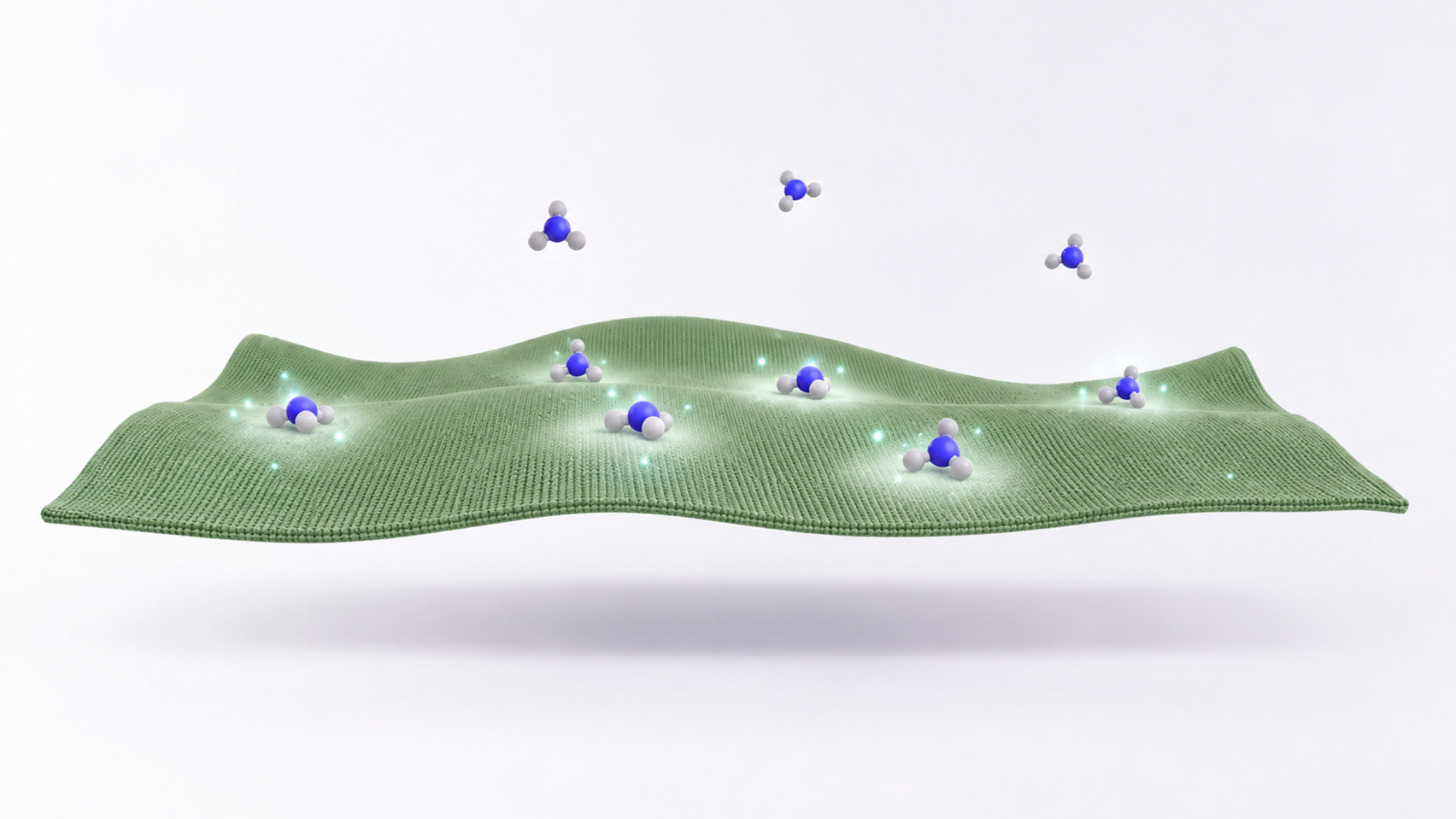
BIOPURE® OC6
Non-Biocidal Odor Control
Technology details ↗
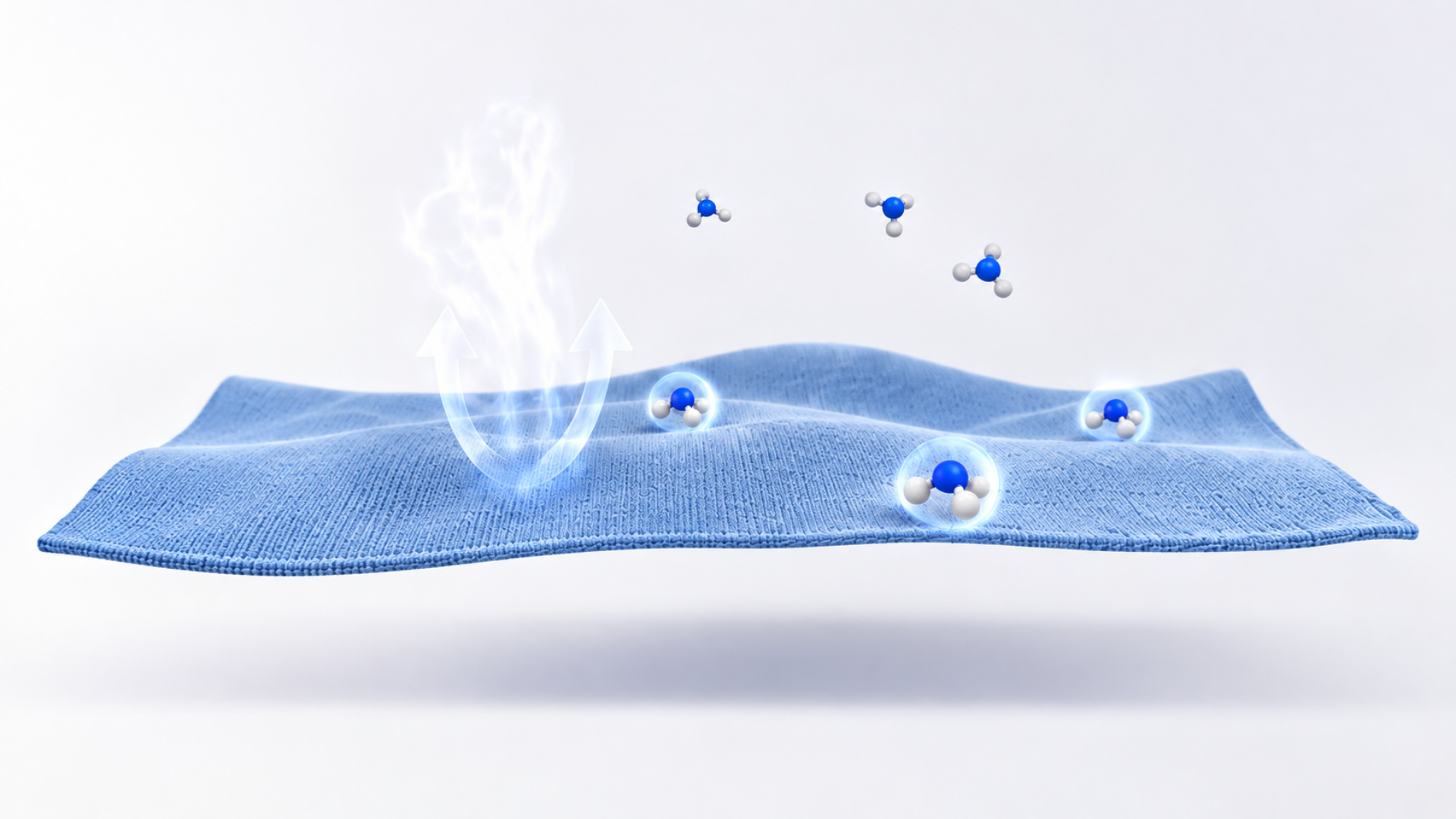
BIOPURE® FS7
Soft · Smooth · Moisture Wicking · Odor Control
Technology details ↗
OdorGuard™ ADV-36
Odor Control
Technology details ↗
A CLOSER LOOK
Your questions, answered.
Which odors can these technologies address?
The relevant odor profile depends on the technology. OdorGuard ADV-36 targets ammonia, isovaleric acid, acetic acid, and nonenal. OC6 and FS7 have their own adsorption profiles. Select the target compounds with AGS and confirm performance on the intended fabric.
Does odor adsorption require an antimicrobial treatment?
No. Non-biocidal adsorption acts directly on odor molecules and can function without killing or inhibiting microorganisms. If a product also requires antimicrobial performance, that is a separate function with its own technology selection and evidence.
What does laundering-based refresh mean?
Washing helps remove retained odor compounds and residues, restoring functional sites for further adsorption. Follow the specified care conditions to maintain both the odor-control function and the qualities of the complete garment.
Can odor control be combined with moisture management?
Yes. Compatible functions can complement one another: moisture movement influences how compounds travel within the textile, while accessible adsorption sites capture suitable odorants. The formulation, fiber type, construction, and application must support both functions. Evaluate each feature after care.
Can the same result be expected on every fabric?
No. Fibers differ in inherent odor retention and adsorption, and construction affects surface area and access to the treatment. Other finishes can also influence performance. Evaluate the finished material and compare it with an appropriate reference.
Build freshness into
your textile materials.
Tell us about your project, fabric, odor challenge, and care requirements. We are here to help you make informed decisions, select a suitable technology, support development, and facilitate commercialization.