
Home / Performance Claims / Insect Repellents
PERFORMANCE CLAIMS · INSECT REPELLENTS
Insect Repellents
Textile treatments that help discourage insect landings and contact, adding repellent function to outdoor apparel, uniforms, and equipment while preserving fabric comfort.

Discourage contact
Reduce interaction with treated textile surfaces
Preserve comfort
Retain softness, flexibility, and breathability
Support repeated use
Match delivery and fixation to wear and care
REPELLENT FUNCTION BUILT INTO THE FABRIC
Less insect contact.
Comfortable textile performance.
Insect-repellent finishing gives textile products an additional function for outdoor and everyday use. Successful development balances the repellent effect with the feel, appearance, and service life of the material.
01
Reduced insect contact
Help discourage landing and prolonged contact with treated fabric surfaces.
02
Function in the textile
Integrate repellency into apparel and equipment used for work, travel, and outdoor recreation.
03
Wearable comfort
Retain the softness, flexibility, and breathability expected from the original material.
04
Durable application
Develop the finish for the fiber, manufacturing process, and intended care requirements.
ACTIVE INGREDIENT + DELIVERY SYSTEM
Discourage approach.
Manage delivery through the textile.
Repellent actives interfere with the cues biting pests use to locate a potential target, discouraging approach, landing, or feeding. The textile delivery system controls how the active is held and made available during use. The combination influences initial performance and retention through care.
Designed for the application
Apparel and uniforms
Outdoor clothing, workwear, and travel apparel need a treatment that works alongside fabric comfort and repeated laundering.
Equipment and home textiles
Tents, sleeping bags, and suitable home textiles present different exposure patterns, constructions, and care demands.
Different ways to deliver repellency
These delivery approaches describe the wider category. The selected technology determines which approach is used.
Surface-active finishes
Repellent chemistry is applied to accessible textile surfaces. Uniform coverage and attachment to the material help establish consistent interaction between the treatment and approaching insects.
Encapsulated delivery
A carrier encloses the active ingredient and manages its release. IntelliBarrier IR-014 uses polymer microcapsules containing Saltidin, also known as picaridin or icaridin. Friction during use helps release the active from the capsules.
Embedded fiber systems
Functional compounds can be incorporated within a fiber system rather than applied only as a surface finish. Availability at the textile surface and retention during use depend on the particular fiber and delivery design.
The complete material matters. Fiber composition, construction, other finishes, and application conditions influence treatment distribution and availability. Develop the repellent system on the textile intended for the finished product.
TEST THE REPELLENT EFFECT
Measure mosquito repellency.
Assess performance through care.
Testing establishes how a treated fabric performs against the target pest under defined conditions. For IntelliBarrier IR-014, AGS reports mosquito assessment using the repellency method of GB/T 30126-2013.
Textiles: Testing and evaluation for anti-mosquitoes properties
The repellency method compares treated and control materials in a mosquito test environment. AGS uses this method to evaluate the reduction in mosquito landing and biting activity for IR-014-treated textiles. State the method, fabric, and treatment conditions with the result.
Repeat the repellency assessment after defined care
Compare initial performance with results after the laundering or use conditions intended for the product. Record the care procedure and number of cycles. The appropriate durability target depends on the textile, finish application, and end use.
Repellency, knockdown, and mortality are different endpoints. Mosquito results establish performance against the mosquitoes tested; tick or other pest claims require assessment of those targets.
AVAILABLE AGS TECHNOLOGY
Explore IntelliBarrier™ IR-014.
A microencapsulated insect repellent finish for cellulosics, synthetics, and blended textiles.
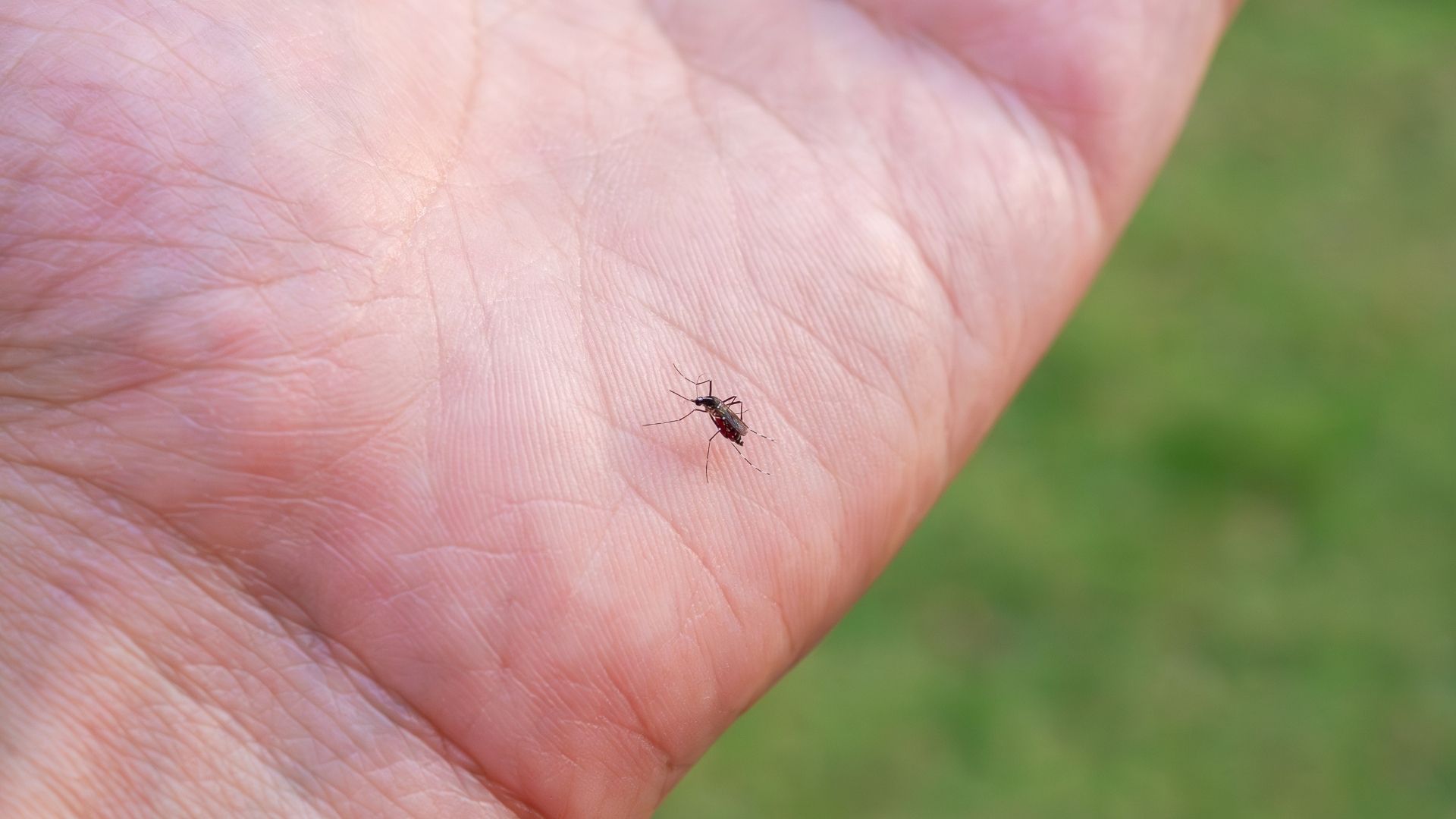
Insect Repellent
IntelliBarrier™ IR-014
Technology details ↗
A CLOSER LOOK
Your questions, answered.
Does repellency mean the treatment kills insects?
Repellency describes behavior that discourages approach, landing, or continued contact. It does not by itself demonstrate knockdown or mortality. Saltidin acts as a repellent without relying on killing mosquitoes.
What about ticks?
Saltidin-based repellents are used against mosquitoes and ticks. That active-ingredient capability does not establish tick performance for every textile formulation. The IR-014 sheet documents mosquito repellency; a tick claim should be supported by testing of the treated textile against ticks.
Does treated clothing replace other bite-prevention measures?
Repellent textiles add a function to the treated fabric. Coverage, garment design, and exposed skin still influence contact with biting pests. Use the finished article as directed alongside appropriate personal protection.
How long does the repellent function last?
Retention depends on the delivery system, treatment level, fixation, fabric, wear, and care. Establish performance after the conditions intended for the product rather than assuming a universal wash count or duration.
Can insect repellency be combined with other Performance Claims?
Potential combinations include odor control and moisture management. Chemistry and processing must be compatible, and each required function should be assessed on the complete finished material.
Build repellent function
into your textile materials.
Tell us about your fabric, intended use, target pest, and durability requirements. AGS can help select the technology, develop the application process, and plan testing on your finished material.