
Home / Performance Claims / Hygrothermal Management
MOISTURE MANAGEMENT · COOLING · THERMOREGULATION
Hygrothermal Management
Hygrothermal management encompasses moisture management, cooling, and thermoregulation technologies. These technologies influence comfort through different mechanisms and can deliver multiple performance features within a single technology.
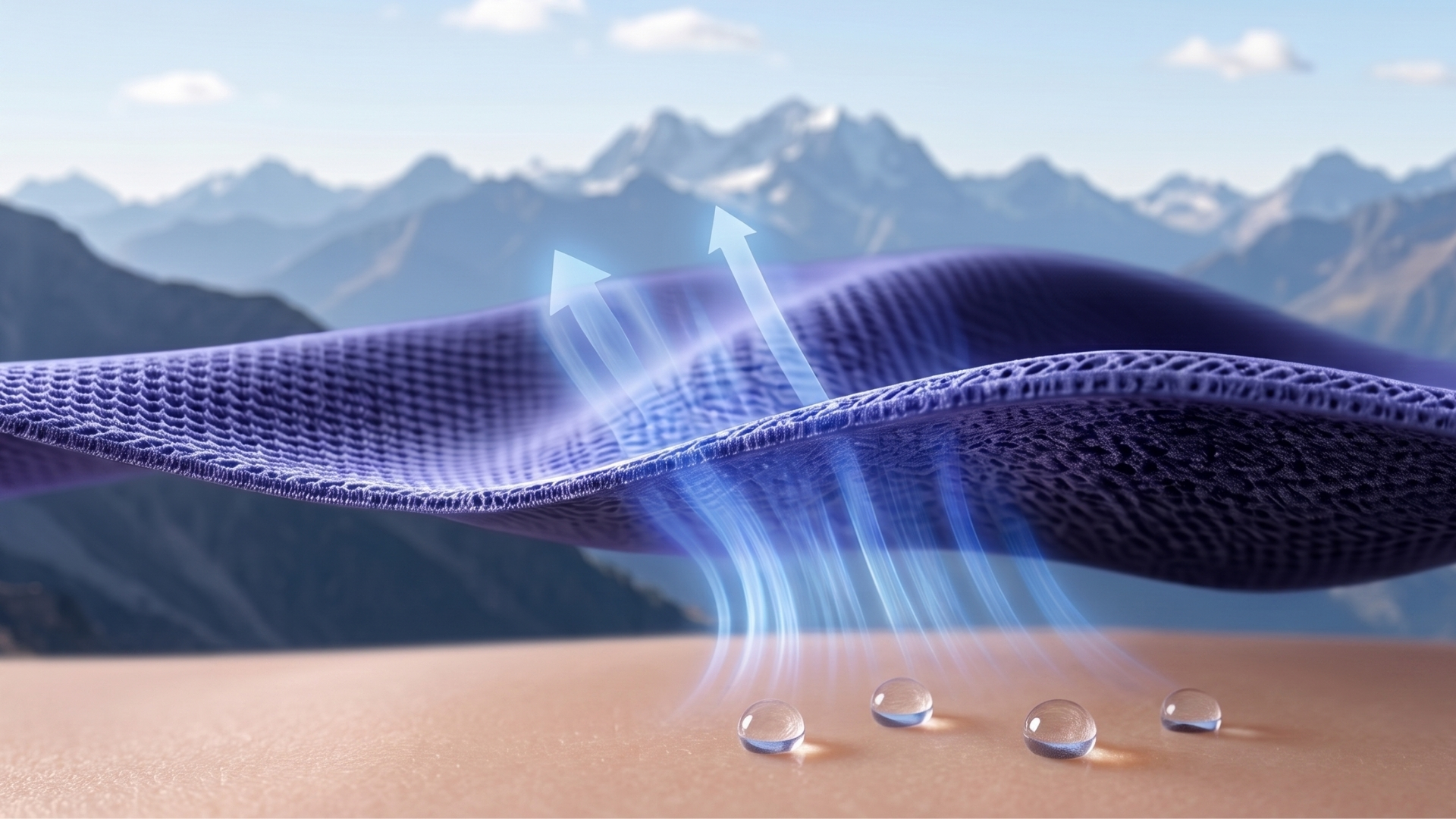
Moisture Management
Absorption, wicking, and quick drying
Cooling
Cool touch, evaporation, and radiative cooling
Thermoregulation
Managing heat gain, retention, and release
PERFORMANCE BENEFITS
Drier textiles.
Better thermal comfort.
From activewear and workwear to bedding, hygrothermal technologies address dampness, heat buildup, and changing thermal conditions. The best practice is to select the performance features that fit the product and its end-use.
01
Reduced dampness
Reduces prolonged wetness and the heavy, clinging feel of damp fabric during and after physical activity.
02
Cooling comfort
Provides a cooling sensation or heat removal, depending on the technology and intended use conditions.
03
Comfort through change
Helps manage thermal conditions even during dynamic changes to activity levels or the environment.
04
Lasting function
Retains the selected performance features through effective application and the product’s intended care cycle.
PERFORMANCE FUNCTIONS AND MODES OF ACTION
Understand the function.
Explore how it works.
Moisture management, cooling, and thermoregulation address related aspects of comfort through different physical processes. Explore the modes of action beneath each function to understand their contribution, overlap, and requirements.

Moisture Management
Controls how a textile takes up, moves, and releases moisture. Absorption, wicking, and drying are related features with different roles; their coordination determines how effectively a material handles perspiration.
Moisture Absorption
The textile takes up liquid at its surfaces, within spaces between fibers and yarns, or within absorbent fibers. Fiber chemistry, surface wetting, and construction influence the speed and amount of uptake. Effective absorption helps collect perspiration, but a material that retains water without releasing it can remain wet and heavy.
Moisture Wicking
Capillary action moves liquid through small spaces between fibers and yarns. Hydrophilic surface chemistry can promote wetting and movement along these pathways, while yarn geometry and construction influence their continuity and direction. Spreading distributes moisture across a larger area, supporting evaporation when conditions allow.
Quick Drying
Retained moisture leaves the textile through evaporation. Drying depends on water retention, exposed wet area, material thickness, temperature, humidity, and airflow. A technology can improve moisture distribution, but good wicking alone does not establish fast drying. Both features should be evaluated on the intended construction.
Cooling
Creates a cooling sensation or supports heat removal through a specific mechanism. The modes below differ in what drives the effect, how long it lasts, and how they depend on the material and surrounding conditions.
Contact Cooling: Cool-to-Touch
Heat transfers from warmer skin into a cooler material at initial contact. Faster transient heat transfer produces a stronger cooling sensation, characterized through measurements such as Qmax. Fiber properties, surface contact, and construction influence the result. The effect diminishes as the temperature difference narrows, so initial cool touch does not establish prolonged cooling.
Evaporative Cooling
Liquid moisture uses thermal energy as it changes into vapor. Moisture management technologies can support this cooling pathway by improving uptake, capillary movement, and spreading. The cooling contribution depends on where evaporation occurs and how effectively heat is drawn from the wearer. Airflow and lower humidity generally favor evaporation; humid conditions can restrict it.
Passive Radiative Cooling
Engineered optical properties influence the balance between absorbed radiation and emitted thermal energy. Solar reflection can reduce solar heat gain, while thermal infrared emission can support heat loss. Material composition, surface exposure, layering, and environmental conditions influence the effect.
This mechanism differs greatly from both sweat-driven evaporation and the initial sensation measured by Qmax.
Thermoregulation
Moderates thermal conditions by influencing heat gain, retention, transfer, and release. It can involve temporary heat storage or a balance between insulation and moisture escape, with the appropriate approach determined by the application.
Phase Change Materials (PCM)
A PCM absorbs latent heat as it enters its transition range and releases stored energy as the phase change reverses. Heat absorption can produce a cooling effect, while the reversible cycle provides temporary thermal buffering. Transition temperature, loading, and heat-storage capacity determine the response. The material must return through its transition range to restore its heat-absorption capacity.
Air Retention
Fibers, yarns, and constructions can retain relatively still air, reducing heat transfer and helping preserve warmth. Hollow structures, loft, thickness, and layering influence this function. Compression, airflow, and moisture can change the insulation provided, so the structure must be selected for the intended thermal conditions.
Air and Vapor Management
A material can retain warmth while allowing perspiration vapor to move away from the skin. Suitable constructions and finishes help balance resistance to heat loss with resistance to vapor transfer. This balance supports comfort during changing activity levels; moisture wicking, breathability, and insulation each describe different properties within that response.
Overlapping features do not imply equivalent performance. One technology may provide multiple features, but the fiber type and material construction must be designed to support the intended end performance. For example, moisture spreading can support evaporative cooling, while PCM heat absorption links a cooling effect with thermal buffering.
VERIFY DISTINCT PERFORMANCE FEATURES
Measure each feature.
Understand the combined performance.
Assess the properties that matter to the intended product. Wicking, drying, cooling energy, initial cool touch, and thermal buffering need different measurements. Evaluating several features on the same finished material establishes how a multifunctional technology performs within that construction.
AATCC TM79: Test method for absorbency of textiles.
JIS L 1907, Section 7.1.1: Testing methods for water absorbency of textiles – Dripping method.
GB/T 21655.1, Section 8.2: Textiles – Evaluation of absorption and quick-drying.
AATCC TM197: Vertical wicking rate of textiles
AATCC TM198: Horizontal wicking rate of textiles
DIN 53924: Testing of textiles – Velocity of soaking water of textile fabrics
GB/T 21655.1: Textiles – Evaluation of absorption and quick-drying
AATCC TM201: Test method for drying rate of fabrics – Heated plate method
FZ/T 01176-2024: Textiles – Determination of fabric drying rate – Hot plate method
ISO 13029: Textiles – Determination of drying rate in dynamic state by the modified sweating-guarded hotplate
GB/T 21655.1-2023, Section 8.3: Textiles – Evaluation of absorption and quick-drying – Part 1: Method for combination tests
JIS L 1927: Textiles – Measurement method of cool touch feeling property
ASTM D7984-21: Measurement of thermal effusivity of fabrics using a Modified Transient Plane Source (MTPS) Instrument
ASTM F1868-23: Thermal resistance, evaporative resistance, and total heat loss measurements of textiles using a sweating hot plate
EN ISO 11092: Textiles — Physiological effects — Measurement of thermal and water-vapour resistance under steady-state conditions
ASTM D1518: Thermal transmittance of textile materials
ASTM F1868: Thermal resistance, evaporative resistance, and total heat loss measurements of clothing materials using a sweating hot plate
EN ISO 15831: Clothing — Physiological effects — Measurement of thermal insulation by means of a thermal manikin
Select the evaluation around the intended performance and use conditions. A strong result for one feature does not establish the same result for another, even when both features come from the same technology.
Renewable inputs.
Purposeful processing.
Durable performance.
Build comfort around the complete material: its source, its production route, and how well its function lasts.
RESPONSIBLE MATERIALS. DURABLE COMFORT.
Consider the source.
Design for lasting function.
Developing hygrothermal performance also means considering raw materials, processing, and durability. AGS offers renewable feedstock-based finishes and embedded technology routes, allowing the appropriate approach to be selected alongside the product’s moisture-management, cooling, or thermoregulation objectives.
Renewable material pathways
BIOPURE MM1 uses castor oil sourced from regenerative agriculture and contains 78% bio-based content. Coconut oil-derived HS5 and FS7 provide hydrophilic softness with 72% and 69% bio-based content, respectively.
Processing with purpose
MM1 can form durable bonds at temperatures as low as 75°C, offering a lower-temperature finishing route. IntelliCool embedded technology incorporates functionality during nylon production and can reduce the need for separate functional finishing steps.
AVAILABLE AGS TECHNOLOGIES
Technologies with distinct strengths.
Materials designed to perform.
Explore technologies with different performance profiles, including options that deliver multiple features. Selection depends on the intended end performance, compatible fiber type, material construction, and integration method.
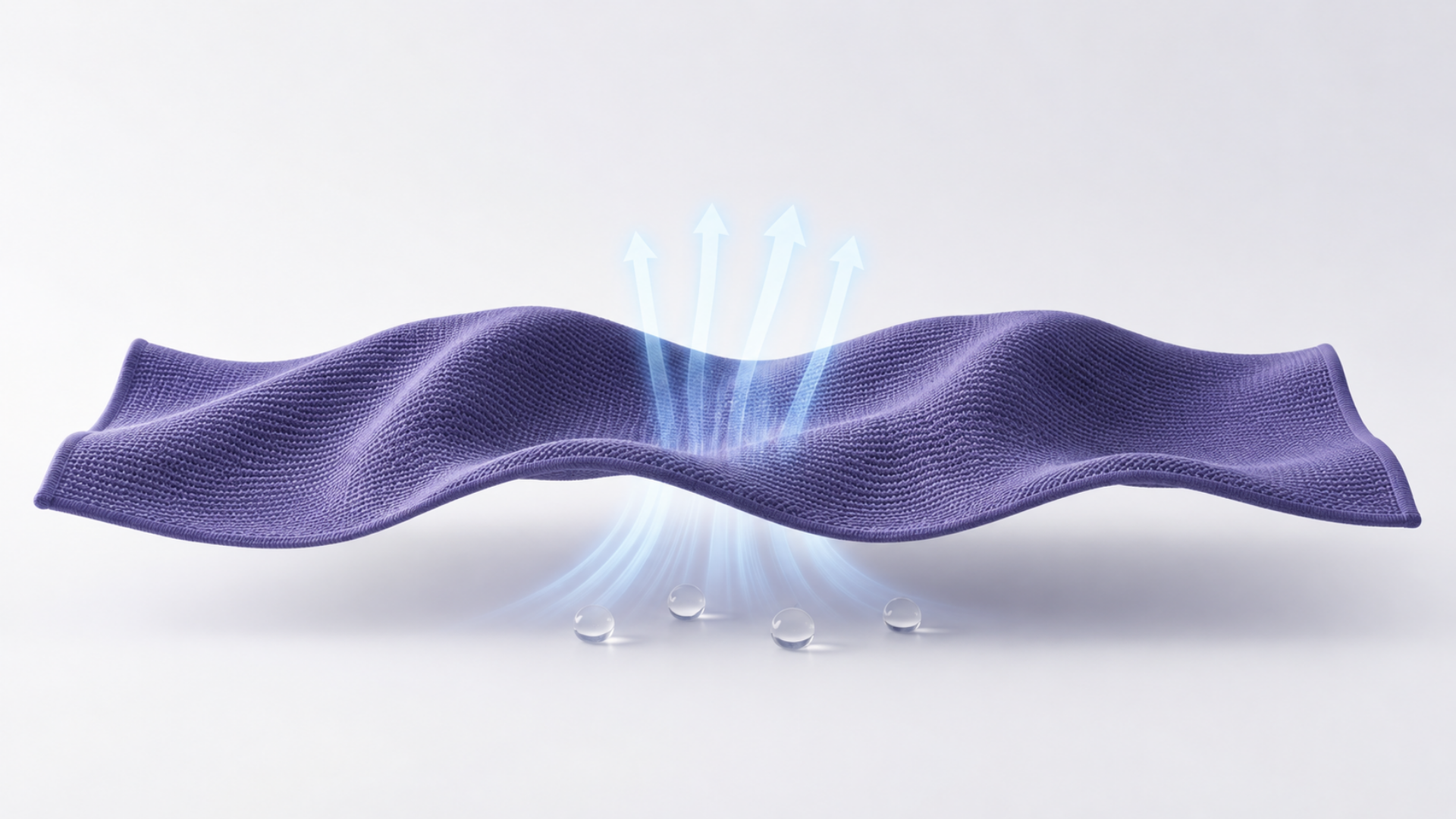
Moisture transport · Drying · Evaporative cooling
BIOPURE® MM1
Technology details
Castor oil-derived hydrophilic technology that promotes rapid moisture movement and spreading. Supports evaporation-driven cooling, with 78% bio-based content and performance specified through 30 home launderings. iNHance™ D001 is the private-label version exclusively available to a key brand partner.
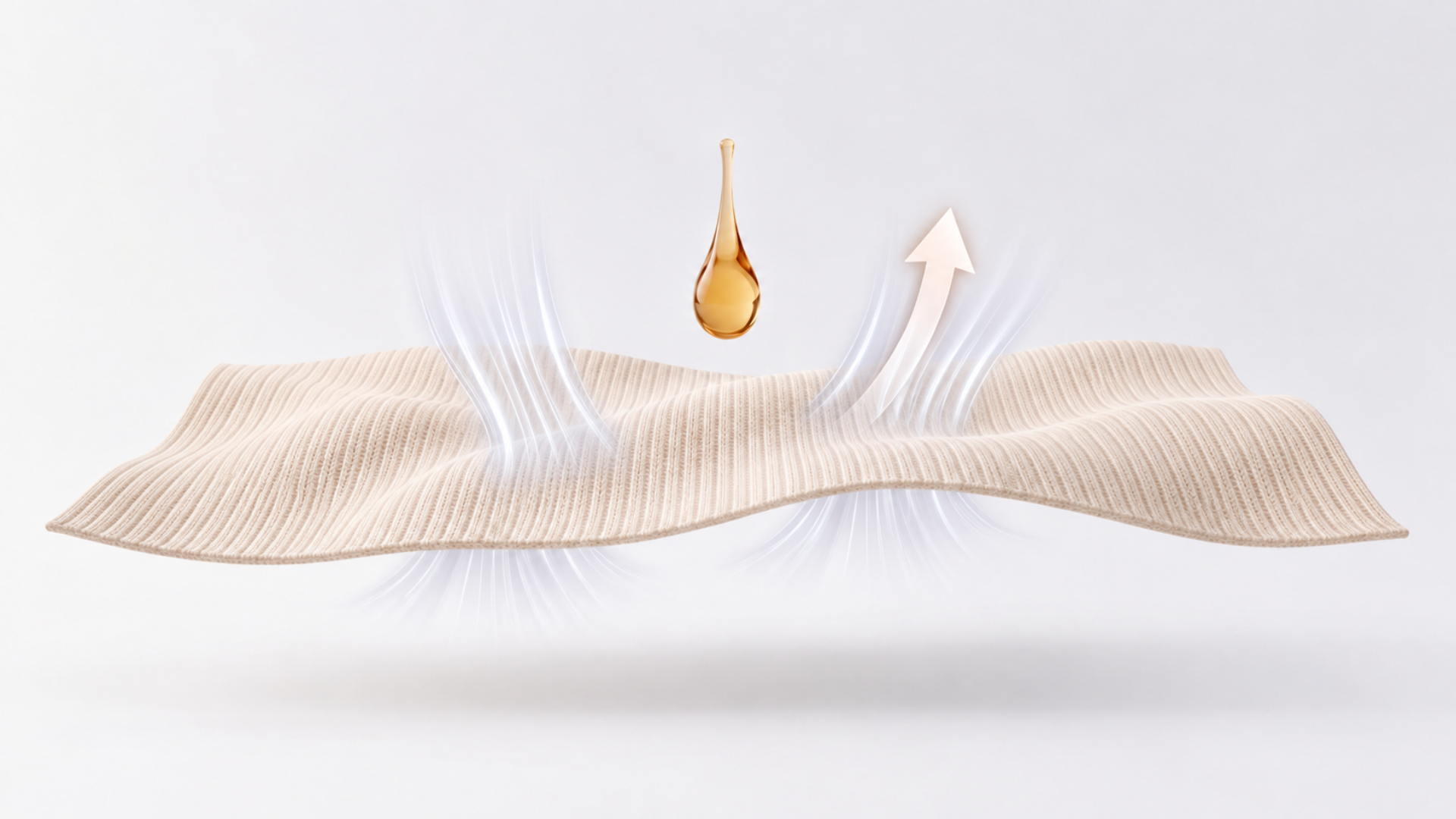
Hydrophilic softness · Moisture wicking
BIOPURE® HS5
Technology details
Coconut oil-derived hydrophilic softener that combines penetrating softness and silk-like smoothness with moisture wicking. Contains 72% bio-based content and is specified for 30 home launderings.
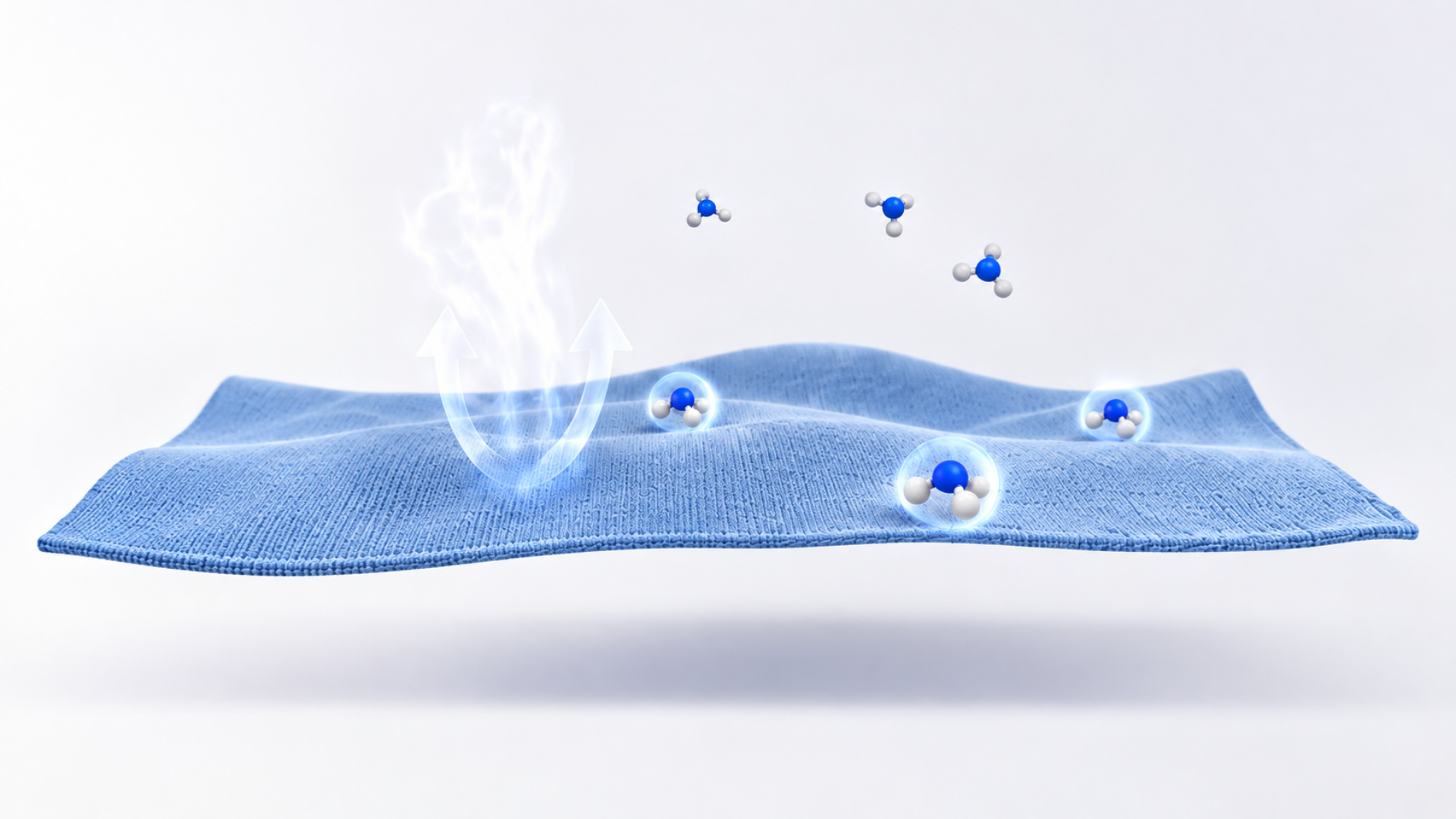
Softness · Moisture wicking · Odor control
BIOPURE® FS7
Technology details
Coconut oil-derived technology that combines hydrophilic softness, moisture wicking, and non-biocidal odor adsorption. Contains 69% bio-based content and is specified for 40 home launderings.
Embedded cooling · Moisture management · Additional functions
IntelliCool™ EMC
Technology details
Embedded nylon technology combining cooling, moisture management, UV protection, and odor control. Its performance features depend on the nylon-based material, yarn and fabric construction, and intended application. Design these elements together to develop the required finished-textile performance.
Cool-to-touch performance
IntelliCool™ contact cooling
Technology details
A technology pathway for an immediate cooling sensation through rapid initial heat transfer. Define the target Qmax performance, substrate, and care requirements with AGS for the proposed application.
Thermal buffering · Heat storage and release
IntelliCool™ PCM technologies
Technology details
Microencapsulated phase change technologies for temporary thermal buffering. TA28 addresses textile applications; the FA28 platform addresses foam. Select the transition range and loading for the product and its expected temperature cycle.
A CLOSER LOOK
Your questions, answered.
What does Hygrothermal Management encompass?
Hygrothermal management encompasses moisture management, cooling, and thermoregulation technologies. These categories describe related but distinct functions. A technology can contribute multiple performance features, depending on its mechanism and the material into which it is integrated.
Can one technology deliver multiple performance features?
Yes. A technology may combine features such as moisture wicking, quick drying, and cooling. Which features it provides, and how well they perform, depends on the technology, fiber type, and material construction. The material must be designed for the intended end performance.
Do shared features mean technologies perform the same way?
No. Two technologies may both improve wicking while differing in cool touch, cooling energy, thermal buffering, durability, or substrate compatibility. Compare the individual features and mechanisms, rather than treating membership in the same performance category as equivalence.
Why do fiber type and construction matter?
They determine the moisture pathways, retained water, contact area, insulation, and opportunities for heat exchange within the material. Those characteristics can enable or constrain the technology’s function. The same technology can therefore produce different results in different constructions.
How should a hygrothermal material be developed?
Start with the use conditions and required performance features. Select a compatible technology, fiber type, and construction, then optimize integration and processing. Evaluate each intended feature on the finished material, including performance after its expected care cycle.
LET’S DEVELOP WHAT’S NEXT
Build better comfort
into your next product.
Tell us about your application, fiber type, construction, and target performance features. AGS can help align the technology and material design to develop the moisture-management, cooling, or thermoregulation performance your product needs.